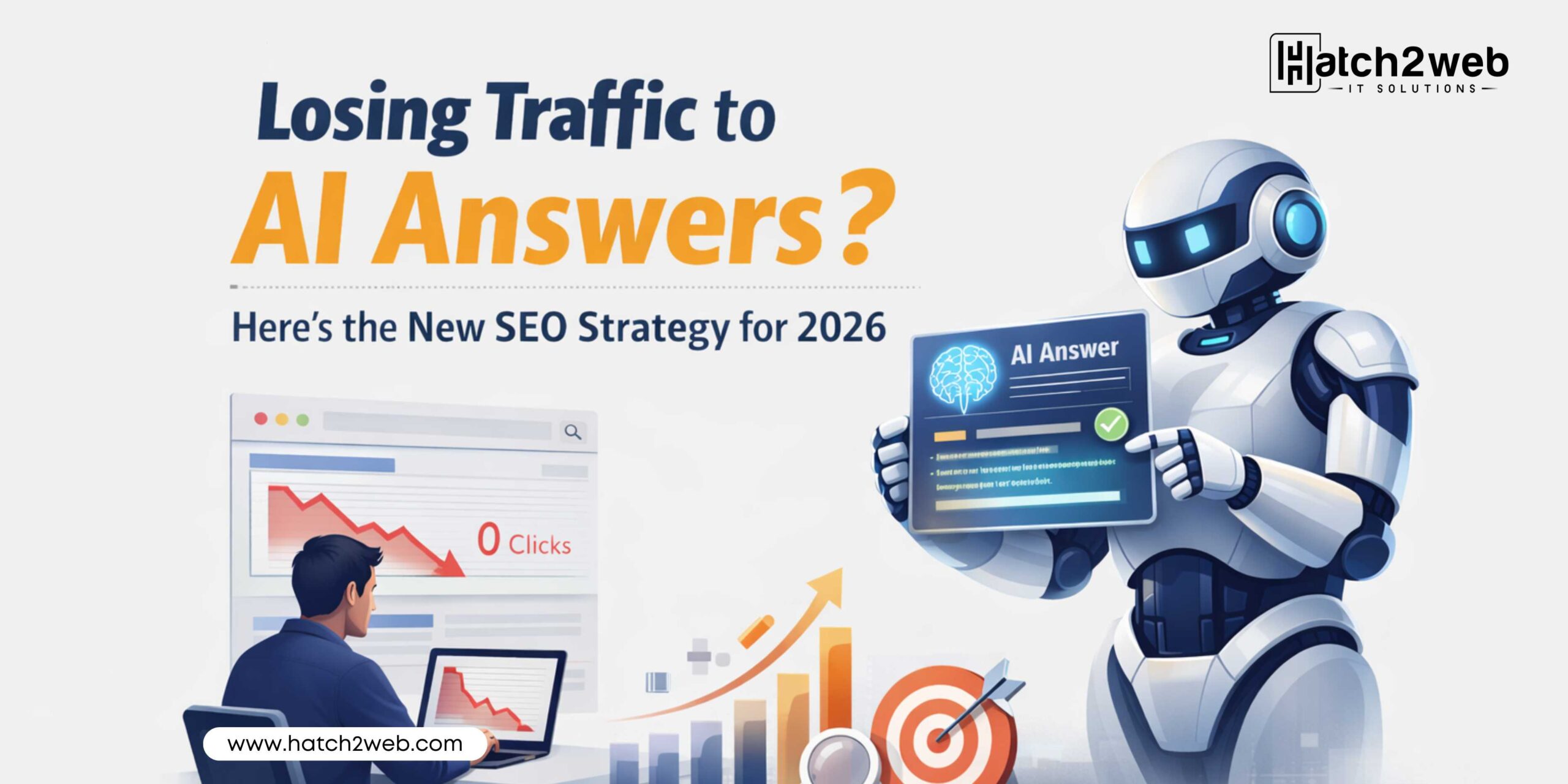
If your website traffic has been declining despite maintaining rankings, you’re not imagining things. Many businesses today are losing traffic to AI answers, and it’s reshaping how SEO works in 2026. Search engines are no longer just gateways to websites—they’re becoming destinations themselves, delivering direct, AI-generated responses that reduce the need for users to click through.
The new SEO strategy for 2026 is not about fighting AI—it’s about aligning with it and ensuring your content becomes the source AI relies on.
Why You’re Losing Traffic to AI Answers in 2026
The rise of AI-powered search experiences—like AI summaries and conversational results—has significantly changed how users interact with search engines. Instead of clicking through multiple links, users now receive immediate, well-structured answers directly on the results page.
This shift leads to:
- A drop in organic click-through rates
- More zero-click searches
- Increased competition for visibility within AI-generated answers
So, even if your content ranks high, it may not receive the same level of traffic as before. Losing traffic to AI answers is less about performance and more about how information is now consumed.
Understanding the Shift: From Traditional SEO to AI SEO
Traditional SEO focused heavily on keyword placement, backlinks, and ranking positions. While these still matter, the new SEO strategy for 2026 goes deeper.
AI-driven search evaluates:
- Context and meaning
- User intent
- Content depth and structure
- Credibility and authority
This means your content must be comprehensive, clearly structured, and genuinely helpful. Instead of optimizing just for rankings, you now need to optimize for interpretation and extraction by AI systems.
The New SEO Strategy for 2026: What Actually Works
To adapt to this evolving landscape, businesses need to refine their approach and focus on long-term value.
1. Optimize for AI Summarization
AI prefers content that is structured and easy to digest. If your content clearly answers questions and is logically organized, it’s more likely to be featured.
Best practices include:
- Writing concise, direct answers
- Using clear headings and subheadings
- Breaking content into readable sections
This improves both user experience and AI visibility.
2. Build Topical Authority
Instead of publishing isolated pieces, focus on becoming an authority in your niche.
You can do this by:
- Creating pillar content around core topics
- Publishing supporting articles regularly
- Linking related content internally
This signals expertise and increases the likelihood of your content being trusted by AI systems.
3. Use Semantic SEO and Natural Language
Modern SEO is about meaning, not repetition. Overusing a single keyword can harm readability and effectiveness.
Instead, use variations and related terms naturally throughout your content. This helps AI understand the full scope of your topic while keeping the content engaging for readers.
4. Strengthen E-E-A-T Signals
Credibility is a major factor in whether your content is surfaced by AI.
Improve your E-E-A-T by:
- Showcasing expertise and experience
- Including real examples or insights
- Keeping your content accurate and updated
Trustworthy content stands a much better chance of being referenced.
5. Focus on High-Intent Keywords
AI answers often satisfy informational queries, but users still click when they’re ready to act.
Target keywords that reflect intent, such as:
- Service-related searches
- Comparison queries
- Purchase-driven terms
These are less likely to be fully answered within AI summaries.
6. Diversify Content Formats
AI systems process more than just text. Expanding into multiple formats increases your visibility.
Consider:
- Video content
- Visual guides
- Infographics
This enhances engagement and opens more opportunities to appear across different search experiences.
7. Build a Strong Brand Presence
Brand recognition plays a critical role in modern SEO. When users search specifically for your brand, AI cannot replace that demand.
Focus on:
- Consistent content marketing
- Thought leadership
- Social media engagement
A strong brand ensures long-term, sustainable traffic beyond algorithm changes.
Conclusion: Adapting to the New SEO Reality
The shift toward AI-driven search is not temporary—it’s the future. While losing traffic to AI answers may feel like a setback, it’s actually an opportunity to refine your strategy and build a stronger digital presence.
The new SEO strategy for 2026 focuses on creating valuable, structured, and trustworthy content that serves both users and AI systems.
To navigate this transition effectively, partnering with the right experts makes a difference. Hatch2Web helps businesses adapt by building AI-optimized content strategies, strengthening topical authority, and focusing on high-intent traffic that drives real results.