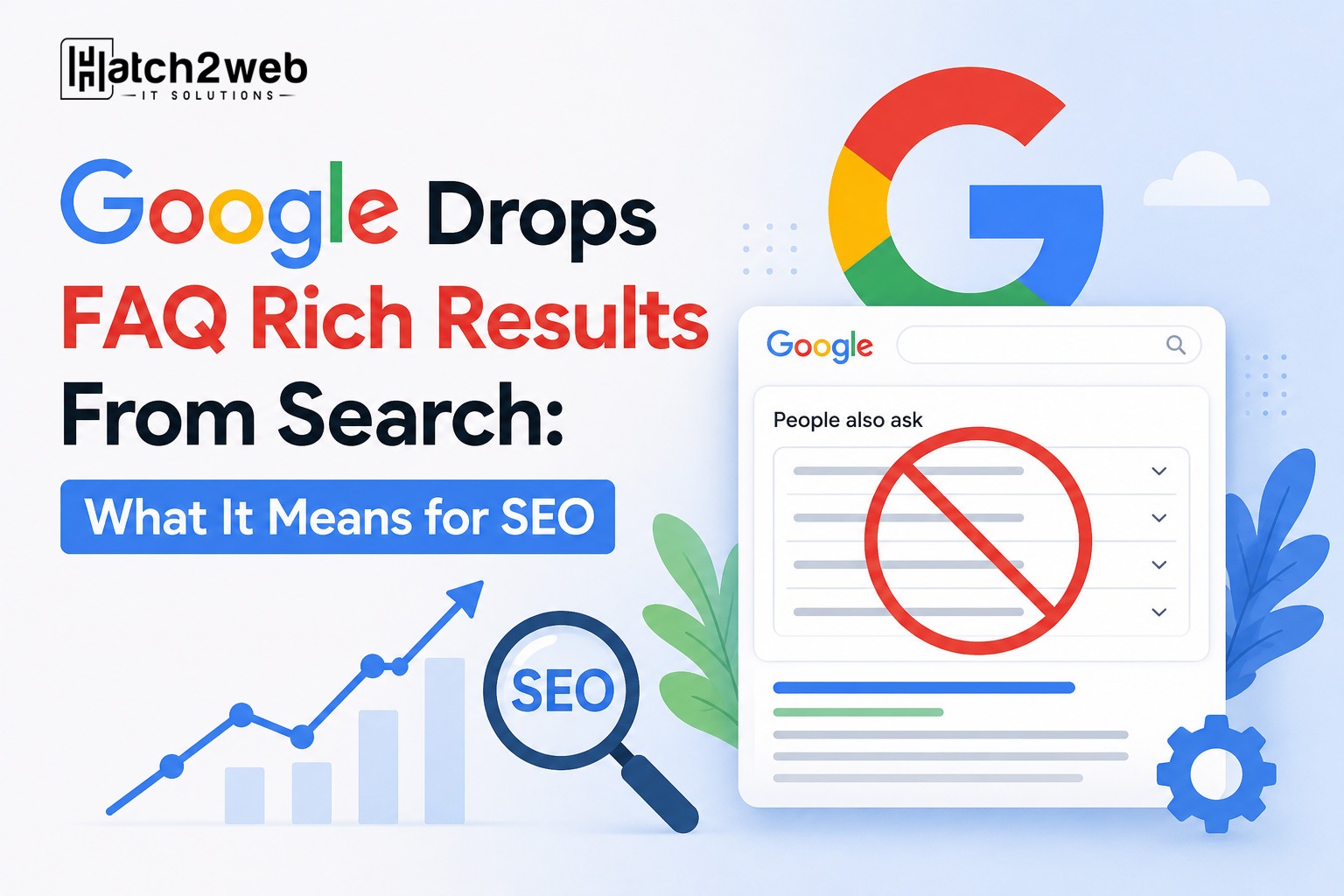
Google Drops FAQ Rich Results From Search has become one of the most discussed updates in the SEO industry. For years, FAQ schema markup helped websites gain additional visibility in search results through expandable FAQ sections that improved click-through rates and search presence. However, Google has now reduced FAQ rich results significantly, limiting them mainly to highly authoritative government and health-related websites.
This update has changed how businesses approach structured data and SEO strategies. While FAQ schema is still useful for organizing content and improving user experience, it no longer guarantees rich snippets in search results for most websites.
Businesses should now focus on long-term SEO strategies built around high-quality content, semantic search optimization, and user experience rather than relying only on visual search enhancements.
Why Google Drops FAQ Rich Results From Search
Google introduced FAQ rich results to help users find quick answers directly from search results. Websites across multiple industries quickly adopted FAQ schema because it increased visibility and often improved organic click-through rates.
However, over time, FAQ schema became heavily overused. Many websites started adding unnecessary FAQ sections purely for ranking advantages instead of improving user experience. This led to search results becoming crowded with repetitive FAQ snippets that often added little value.
As a result, Google Drops FAQ Rich Results From Search to improve overall search quality and reduce clutter in search listings.
Today, FAQ rich results are mostly shown for:
- Government websites
- Trusted health websites
- Highly authoritative informational sources
Most commercial and business websites will rarely see FAQ snippets displayed in search results moving forward.
What Google Drops FAQ Rich Results From Search Means for SEO
Although many marketers initially viewed this update as negative, the reality is that modern SEO has already shifted beyond simple rich snippets.
The Google Drops FAQ Rich Results From Search update reinforces a broader trend in search engine optimization: Google rewards content quality, relevance, expertise, and user satisfaction more than visual search features.
Businesses should now focus on building strong topical authority and creating valuable content that genuinely answers user intent.
SEO Is Becoming More Semantic
Google’s algorithms are becoming increasingly advanced in understanding:
- Search intent
- Topic relationships
- Contextual meaning
- Content depth
- User behavior
This means structured data should now support semantic understanding rather than being used only to trigger rich results.
FAQ schema still helps Google understand page structure and question-answer relationships, even if the visual rich snippet does not appear.
Semantic SEO strategies should focus on helping search engines understand content naturally through:
- Clear topic organization
- Helpful content structure
- Proper heading hierarchy
- Internal linking
- Contextual relevance
Should Websites Still Use FAQ Schema?
Yes. Even though Google Drops FAQ Rich Results From Search for most websites, FAQ schema still offers several benefits.
Many businesses are now asking whether they should remove the FAQ schema already added to their websites. In most cases, the answer is no.
Existing FAQ schema should generally remain on the website if the FAQ content is helpful, relevant, and genuinely supports the user experience. Google has reduced the visibility of FAQ rich results, but schema markup still helps search engines better understand content structure and relationships.
Removing all FAQ schema is usually unnecessary unless:
- The FAQ section is spammy or repetitive
- The content was added only for rankings
- The FAQs provide little value to users
- The schema implementation contains errors
Businesses should focus on quality instead of simply deleting schema markup.
1. Improved Content Organization
FAQ sections help organize information clearly for users. They make content easier to scan and improve readability.
2. Better User Experience
Users often search for direct answers to common questions. FAQ sections help address concerns quickly and improve engagement.
3. Semantic SEO Benefits
Structured data helps search engines understand relationships between questions and answers. This supports better content interpretation and indexing.
4. Voice Search Optimization
FAQ content can still support voice search queries and conversational search experiences.
How Businesses Should Adapt Their SEO Strategy
If the existing FAQ schema is properly implemented and supports useful content, businesses should continue using it.
The recommended approach is:
- Keep high-quality FAQ schema
- Remove low-value or unnecessary FAQs
- Focus on user intent instead of rich snippets
- Maintain clean and valid structured data
- Use schema as a support tool for semantic SEO
Schema markup still contributes to search engine understanding even when visual FAQ rich results are not displayed.
Instead of removing FAQ sections entirely, businesses should use them strategically and only when they genuinely add value.
Common SEO Mistakes After Google Drops FAQ Rich Results From Search
Many websites may react incorrectly to this update by completely abandoning structured content strategies. However, several mistakes should be avoided.
Overusing Schema Markup
Adding unnecessary schema purely for ranking manipulation can reduce content quality and create poor user experiences.
Schema should support helpful content, not replace it.
Focusing Only on Rich Snippets
SEO success today depends on much more than visual enhancements in search results. Businesses should prioritize:
- Helpful content
- Expertise
- User trust
- Search intent alignment
- Technical SEO performance
Ignoring Content Quality
No amount of schema markup can compensate for weak or generic content. Google continues rewarding websites that provide original insights and practical value.
Content strategies should focus on creating informative, SEO-focused content that balances optimization with genuine audience value.
How Businesses Should Adapt Their SEO Strategy
The Google Drops FAQ Rich Results From Search update highlights the importance of long-term SEO sustainability.
Instead of relying on temporary ranking tactics, businesses should focus on building stronger digital authority.
Create Helpful Content
Content should answer real user questions clearly and provide practical information.
Build Topical Authority
Publishing consistent, high-quality content around core industry topics helps improve authority and search visibility.
Focus on E-E-A-T Principles
Google increasingly rewards:
- Experience
- Expertise
- Authoritativeness
- Trustworthiness
Businesses should showcase expert knowledge, credible sources, and authentic insights.
Improve Technical SEO
Modern SEO performance also depends on:
- Mobile responsiveness
- Fast page speed
- Core Web Vitals
- Proper indexing
- Secure HTTPS websites
Use Structured Data Strategically
Schema markup still plays an important role in helping search engines understand content structure and entities.
The key difference is that schema should now support content quality instead of acting as a shortcut for visibility.
How Hatch2Web Helps Businesses Navigate SEO Changes
SEO algorithms continue evolving rapidly, and businesses need adaptive strategies to maintain visibility.
At Hatch2Web, SEO strategies focus on:
- Semantic search optimization
- High-quality content creation
- Technical SEO improvements
- User-focused website experiences
- Structured content strategies
- Long-term organic growth
Rather than depending on outdated tactics, businesses should build SEO foundations that align with Google’s evolving priorities.
The Google Drops FAQ Rich Results From Search update is another reminder that sustainable SEO success comes from providing real value to users.
Conclusion
Google Drops FAQ Rich Results From Search marks a major shift in how businesses should approach structured data and SEO optimization. While FAQ rich snippets are now limited for most websites, FAQ content and schema markup still provide value when used correctly.
Modern SEO is no longer about chasing visual search features alone. Google increasingly prioritizes content quality, semantic relevance, user experience, and topical authority.
Businesses that continue focusing on helpful, trustworthy, and well-structured content will remain competitive in search rankings even as search features evolve.
Businesses can develop future-ready SEO strategies that combine technical optimization, semantic search practices, and high-quality content to achieve sustainable online growth.