The AI Content Quality Guide is becoming increasingly important as businesses adopt artificial intelligence to create blogs, marketing campaigns, and SEO-focused content. While AI tools can significantly speed up content production, Google evaluates content based on quality, originality, usefulness, and user experience—not on how it was created.
Artificial intelligence has transformed the way businesses produce digital content. From blog writing and product descriptions to social media captions and email campaigns, AI tools are helping brands generate content faster and more efficiently than ever before. However, a common question still remains among marketers: Does Google reward AI-generated content?
The answer is simple—Google does not penalize content simply because AI was involved in its creation. Instead, it focuses on the value the content delivers to users. Factors such as relevance, accuracy, depth, and overall user experience are what truly impact rankings.
This is where an effective AI Content Quality Guide becomes essential. It helps businesses use AI as a supportive tool rather than a replacement for human creativity, ensuring that content remains high-quality, credible, and SEO-friendly.
In this blog, we will explore what Google actually rewards, how AI-generated content should be optimized, and the best practices businesses can follow to stay competitive in search rankings.
Why an AI Content Quality Guide Matters for SEO
As AI writing tools become more common, search engines are focusing more heavily on content quality signals. Google’s algorithms are designed to identify content that genuinely helps users solve problems, answer questions, and make informed decisions.
An effective AI Content Quality Guide helps businesses avoid common mistakes such as:
- Publishing low-quality or repetitive AI-generated content
- Keyword stuffing for search rankings
- Creating articles without original insights
- Producing content that lacks expertise or accuracy
- Ignoring user intent and readability
Google’s main goal is to provide users with the most valuable and trustworthy information possible. Whether content is written by humans, AI, or a combination of both, it must deliver real value.
What Google Rewards in an AI Content Quality Guide
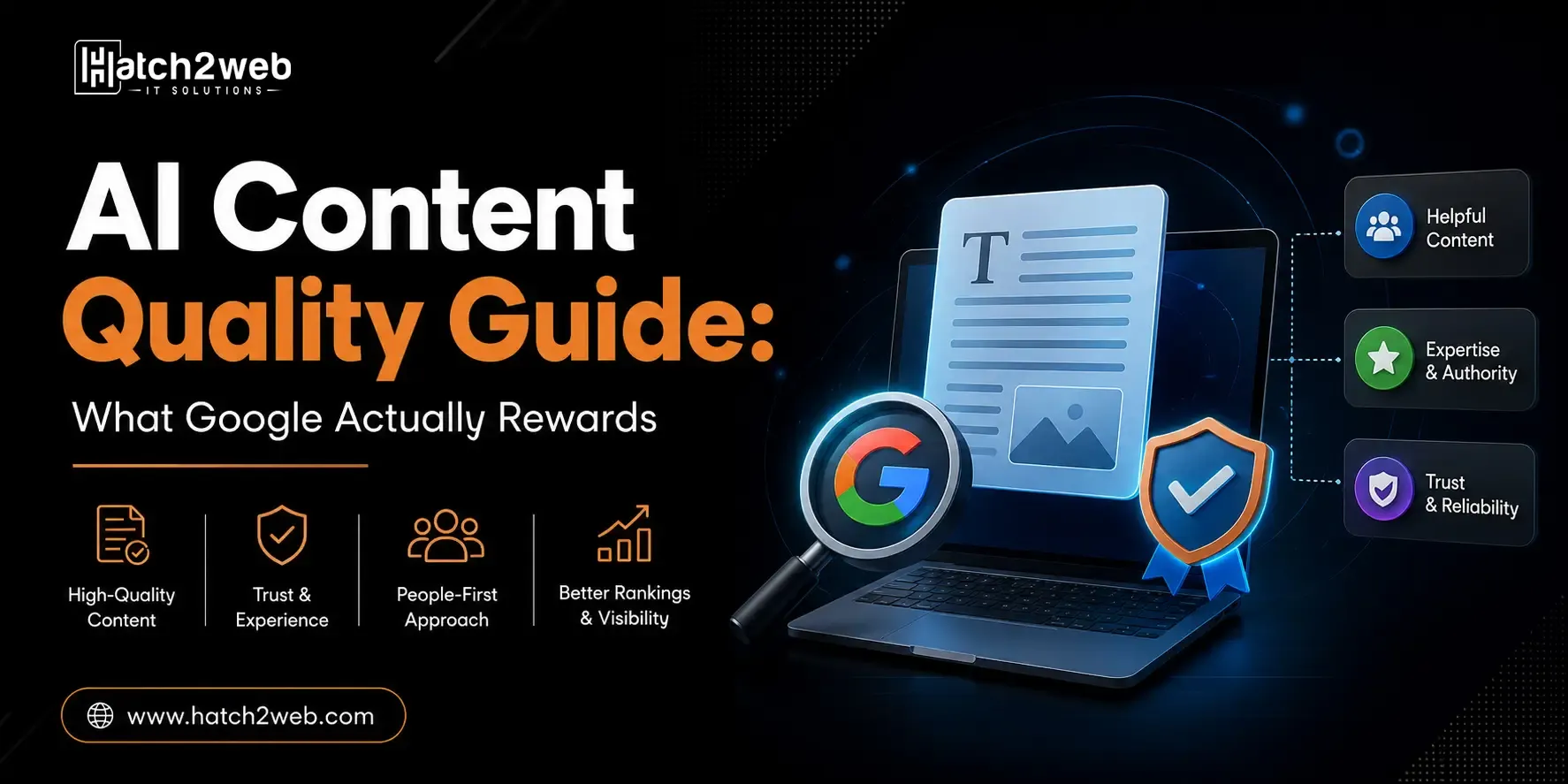
Google rewards content that follows its E-E-A-T principles: Experience, Expertise, Authoritativeness, and Trustworthiness. AI-generated content can perform well when it aligns with these standards.
1. Helpful and User-Focused Content
The first priority in any AI Content Quality Guide should be usefulness. Google favors content that answers user questions clearly and provides practical solutions.
For example, if someone searches for SEO tips, they expect actionable guidance instead of generic filler text. AI-generated articles should always be reviewed and improved by humans to ensure they provide meaningful information.
Helpful content typically includes:
- Clear explanations
- Step-by-step guidance
- Relevant examples
- Accurate information
- Easy-to-read formatting
2. Original Insights and Human Expertise
AI can generate text quickly, but it often lacks real-world experience and unique perspectives. Google values content that demonstrates expertise and practical knowledge.
This is why businesses should use AI as a support tool rather than relying on it entirely. Human editors should add industry insights, case studies, examples, and professional opinions.
A strong AI Content Quality Guide encourages businesses to combine automation with human creativity. This balance creates content that feels authentic and trustworthy.
3. Content That Matches Search Intent
One of the most important SEO factors is search intent. Google rewards pages that align closely with what users are actually searching for.
If users want educational information, your content should educate them. If they want product comparisons, your content should compare options clearly.
AI tools can help identify keywords and structure content efficiently, but businesses must still understand their audience’s needs. Effective SEO strategies should combine technical optimization with user-centered content planning.
Common Mistakes in an AI Content Quality Guide
Even with advanced AI tools, poor-quality content can still damage rankings and brand reputation. A proper AI Content Quality Guide should help businesses avoid these common problems.
Overusing Keywords
Keyword optimization is important, but excessive repetition can hurt readability and SEO performance. Google’s algorithms are smart enough to detect unnatural keyword usage.
Instead of stuffing keywords repeatedly, use them naturally throughout headings, introductions, body content, and conclusions.
Publishing Without Human Review
AI-generated content can sometimes contain inaccuracies, outdated information, or awkward phrasing. Human review is essential before publishing.
Editors should check:
- Grammar and readability
- Accuracy of facts
- Brand tone consistency
- SEO optimization
- User experience
Creating Thin or Generic Content
Google does not reward content that offers little value. Thin articles with vague information often struggle to rank.
Businesses should focus on creating comprehensive, informative, and engaging content that genuinely helps readers.
How Hatch2Web Creates High-Quality AI-Assisted Content
At Hatch2Web, modern SEO is built on both innovation and authenticity. A balanced content strategy combines AI efficiency with expert human editing to create content that performs well in search engines while maintaining brand credibility.
Our process includes:
- Researching user intent and trending topics
- Structuring SEO-friendly content
- Using AI tools for content support and idea generation
- Adding expert insights and human creativity
- Optimizing readability and engagement
- Reviewing technical SEO elements
This balanced approach allows businesses to scale content production without compromising quality.
Best Practices From an Effective AI Content Quality Guide
Businesses that want long-term SEO success should follow these proven strategies:
Focus on Reader Value First
Always prioritize the audience over search engines. Content should educate, solve problems, or provide useful insights.
Keep Content Updated
Google rewards fresh and relevant information. Regularly update AI-generated content to maintain accuracy and improve rankings.
Improve Readability
Use short paragraphs, headings, bullet points, and simple language to improve the user experience.
Combine AI With Human Creativity
The best-performing content often combines AI-generated efficiency with human storytelling and expertise.
Conclusion
An effective AI Content Quality Guide is not about avoiding AI — it is about using AI responsibly and strategically. Google rewards high-quality content that is useful, trustworthy, original, and aligned with user intent.
Businesses that rely entirely on automated content without human oversight may struggle to maintain rankings over time. However, brands that combine AI tools with expert editing, SEO strategy, and valuable insights can achieve strong search visibility and audience engagement.
At Hatch2Web, businesses can create SEO-focused content that balances technology with human expertise. By following modern content quality standards and prioritizing user value, brands can build sustainable online growth and stronger search engine performance.