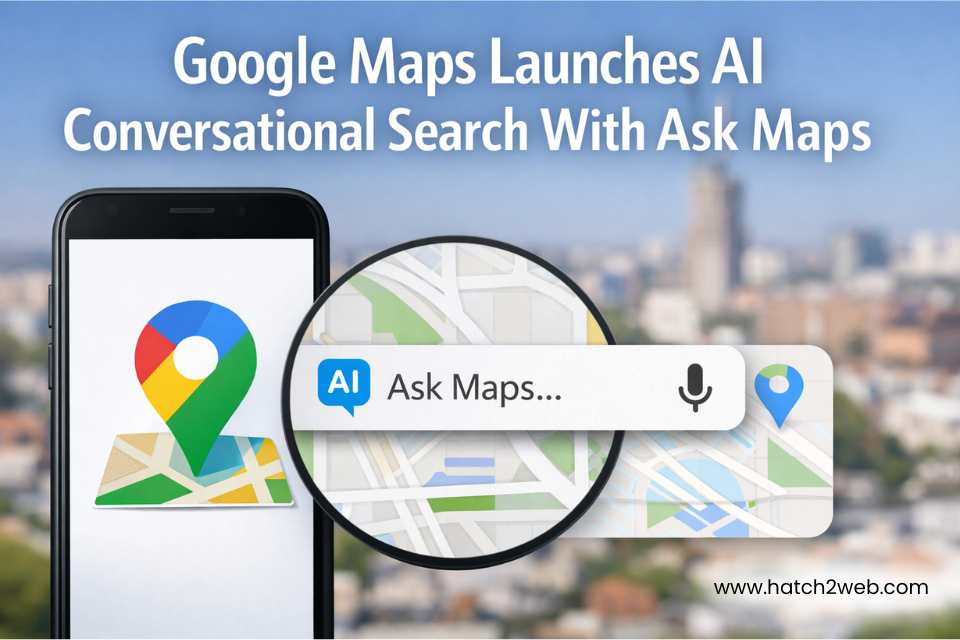
Google has taken a major step forward in local search by introducing Google Maps AI Conversational Search with Ask Maps. This new feature transforms how users interact with maps, shifting from traditional keyword-based queries to a more natural, conversational experience powered by AI. Instead of typing short phrases like “restaurants near me,” users can now ask detailed questions and get personalized, context-aware results instantly.
As search behavior evolves, this innovation signals a big shift in how businesses need to approach local SEO, user intent, and visibility in Google Maps.
What Is Google Maps AI Conversational Search (Ask Maps)?
Ask Maps is an AI-powered conversational search feature integrated into Google Maps. It allows users to interact with the platform using natural language, similar to chatting with an assistant. Powered by Google’s advanced AI models, this feature understands complex queries and provides tailored recommendations based on user preferences, location, and context.
For example, instead of searching for “cafes,” a user can ask:
“Find me a quiet café with outdoor seating and good Wi-Fi nearby.”
Google Maps then analyzes multiple factors such as reviews, location data, and user behavior to deliver highly relevant results.
How Google Maps AI Conversational Search Is Changing Local Search
The introduction of AI conversational search in Google Maps is redefining how users discover local businesses. Here’s how:
1. Focus on User Intent
Traditional search relied heavily on exact-match keywords. Now, AI understands search intent, meaning businesses must optimize for what users actually want—not just what they type.
2. Personalized Search Results
Ask Maps uses AI to deliver results based on user preferences, past behavior, and real-time context. This makes personalized local search results more accurate than ever.
3. Voice Search Optimization
With conversational queries becoming more common, voice search optimization is now critical. Users are more likely to speak full questions rather than type short keywords.
4. Enhanced User Experience
The interactive nature of Ask Maps improves engagement and reduces search friction, allowing users to find exactly what they need faster.
Key Features of Google Maps AI Conversational Search
The Google Maps AI conversational search with Ask Maps introduces several powerful features:
- Natural Language Processing (NLP): Understands complex and conversational queries
- Context Awareness: Considers user location, time, and preferences
- Smart Recommendations: Suggests places based on reviews, ratings, and trends
- Follow-Up Questions: Users can refine results by asking additional questions
- Visual Insights: Provides images, directions, and real-time updates
These features make Google Maps not just a navigation tool, but a complete AI-driven discovery platform.
Impact on Local SEO Strategies
This update has significant implications for businesses and marketers focusing on local SEO services.
Optimize for Conversational Keywords
Instead of targeting only short keywords, businesses should include long-tail keywords and question-based phrases like:
- “best restaurants for families near me”
- “affordable salons with good reviews”
Improve Google Business Profile
A fully optimized Google Business Profile (GBP) is more important than ever. Ensure:
- Accurate business information
- Updated working hours
- High-quality images
- Regular customer reviews
Focus on Reviews and Ratings
AI heavily relies on user-generated content. Positive reviews and detailed feedback improve visibility in conversational search results.
Create Location-Based Content
Publishing local content marketing such as blogs, guides, and FAQs can help businesses appear in AI-driven search responses.
Why This Update Matters for Businesses
The shift to AI-powered local search is not just a feature update—it’s a fundamental change in how customers find businesses.
- Higher competition: Only the most relevant and optimized listings will appear
- Better targeting: Businesses can reach users with high purchase intent
- Increased visibility opportunities: Those who adapt early gain an advantage
Businesses that fail to optimize for conversational search may lose visibility, even if they previously ranked well.
Best Practices to Adapt to Ask Maps
To stay competitive in the era of Google Maps AI conversational search with Ask Maps, follow these best practices:
- Use natural, conversational language in your website content
- Optimize for mobile and voice search
- Regularly update your Google Business Profile
- Encourage and respond to customer reviews
- Add FAQs that match real user queries
- Use structured data (schema markup) for better AI understanding
Future of Google Maps AI Conversational Search
The launch of Ask Maps shows that AI will continue to play a bigger role in search. We can expect further advancements in:
- Hyper-personalized recommendations
- Real-time data integration
- Predictive search behavior
- Deeper integration with voice assistants
This evolution will make search more intuitive, but also more competitive for businesses.
Are You Ready for Google Maps AI Conversational Search?
Hatch2Web helps businesses stay ahead in the evolving digital Marketing landscape shaped by Google Maps AI conversational search with Ask Maps. This innovation marks a new era in local search, where understanding user intent and delivering personalized results becomes the top priority. Businesses must move beyond traditional SEO tactics and embrace conversational, user-focused optimization strategies to remain visible.
Adapting to this shift requires a strong focus on local SEO, high-quality content, and seamless user experience. Companies that align their strategies with AI-driven search trends will gain a clear competitive advantage and attract more qualified local traffic.
With the right expertise and approach, businesses can improve their visibility in AI-powered search, strengthen their local presence, and drive meaningful growth in an increasingly competitive environment.